Our audiologists assess the auditory system to diagnose hearing loss in order to determine what intervention is needed. Diagnostic audiological assessment includes:
Pure Tone Audiometry:
Air conduction and bone conduction
Impedance Audiometry:
Tympanometry
Acoustic reflexes
Speech Audiometry
Conditioned Play Audiometry
Visual Reinforcement Audiometry (VRA)
Eustachian Tube Function Testing
Electrophysiological testing:
Otoacoustic emissions (OAE)
Auditory Brainstem Response (ABR)
Auditory Steady-State Response (ASSR)
Dizziness and Balance Assessments
Dizziness and Balance Assessments
We conduct the following balance tests to assess the vestibular system to determine the cause of dizziness, vertigo or imbalance:
Electrocochleography (ECochG)
Vestibular Evoked Myogenic Potentials (Vemps)
Video Head Impulse Test (VhIT)
Hearing Aids
Hearing Aids
We fit the hearing aids from the following companies
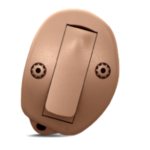
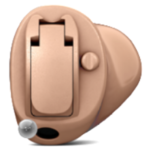
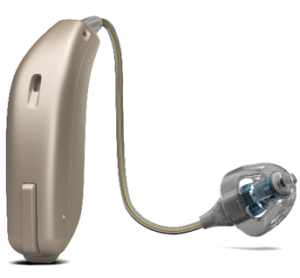
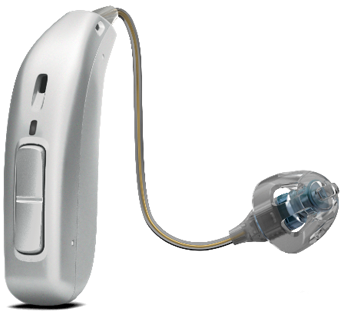
We offer a wide variety of hearing aid sizes, styles and colours:
IIC – invisible-in-the-canal
CIC – completely-in-the-canal
aITE – in-the-ear
miniRITE – mini receiver-in-the-ear
RIC – receiver-in-the-canal
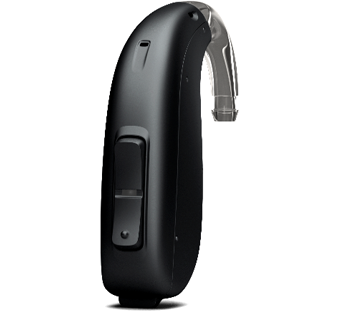
BTE – behind-the-ear
Benefits of the Latest Digital
Hearing Aid Technology
Hearing Aid Features
Communication with a cell phone app to allow for more flexibility e.g. to programme the aids and make further adjustments, such as changing the volume and programme
Customize programmes by adjusting the Bass and Treble yourself; finding my hearing aids; checking battery life
Direct streaming of the hearing aids to your cell phone and other devices for streaming phone calls and music, podcasts etc.
Self-checks (i.e. running diagnostics on the hearing aids and analyzing your hearing aid system’s performance)
Machine learning and artificial intelligence
Remote care and teleaudiology - have your hearing aids programmed without having your audiologist present
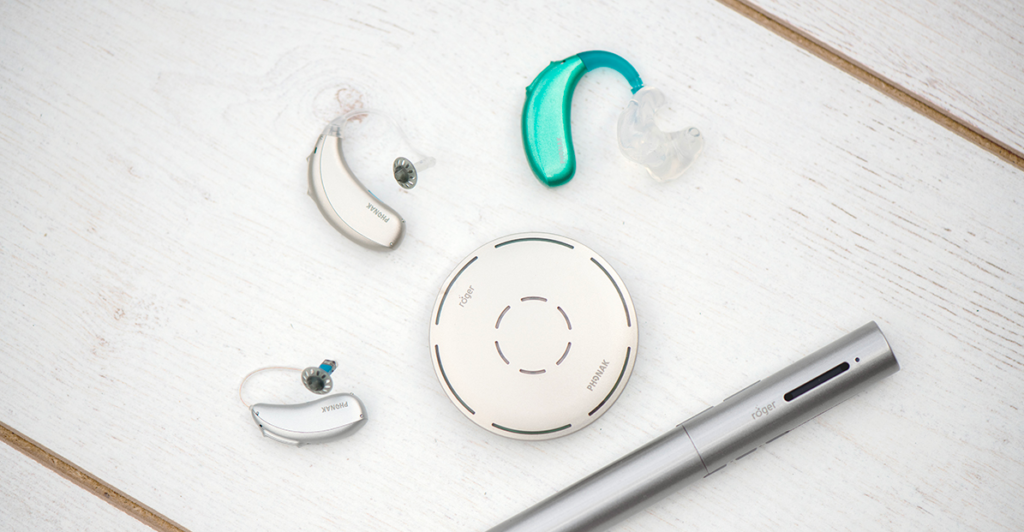
Assistive listening devices (e.g. FM systems for children with auditory processing difficulties/ hearing loss to hear better in the classroom environment; and wireless microphones for adults
Fitness tracking – brain and body tracking
Fall detection and alerts - hearing aids can detect when you fall and send alert messages to selected contacts
Siri Integration - have Siri read texts and emails directly to your hearing aids
Reminders - set up reminders for appointments, taking medications or other personal tasks
Answering questions – hearing aid provides quick answers to questions like, “how do I adjust volume?” or “what’s the weather?”
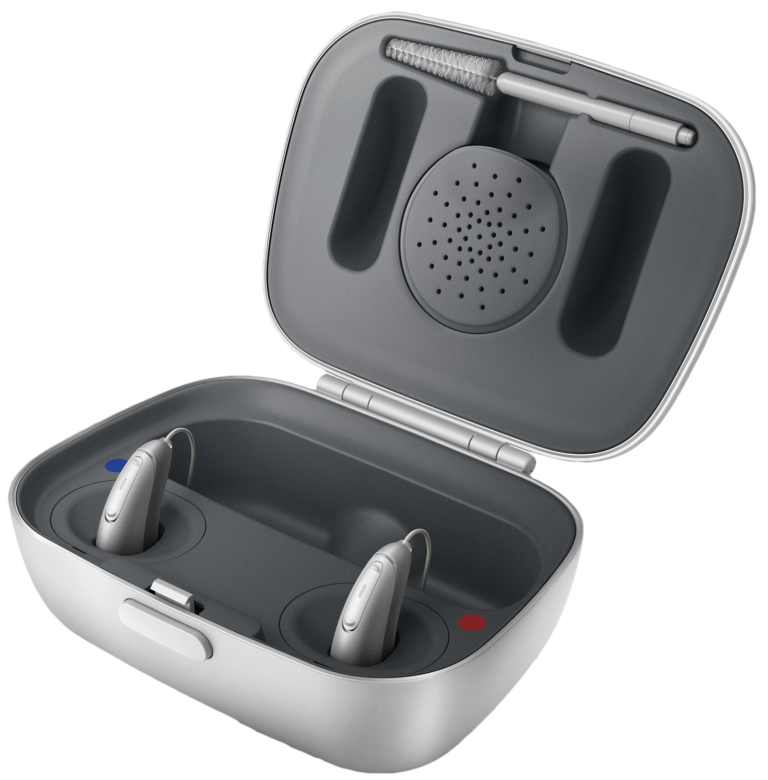
Rechargeable hearing aids – batteries are no longer needed
(Please note, features vary according to the hearing aid make and model)
Online hearing aid adjustments for Beltone, Oticon, Starkey and Widex
Online tutorials on cleaning and maintaining hearing aids
Tinnitus Retraining Therapy
Delivery of accessories and batteries
Hearing aid repairs
The perception of noise or ringing in the ears
Typical Causes
Exacerbating factors
Tinnitus intervention
Age-related hearing loss
Noise damage
Various conditions of the ear, e.g. Ménière’s disease
Certain medications
Caffeine and alcohol
Nicotine
Loud noise
Stress
High cholesterol and hypothyroidism
Tinnitus Retraining Therapy (TRT) which entails:
Fitting of tinnitus masker
Habituation, adaptation and counselling
Tinnitus apps to assist in the TRT process
Fitting of custom-made:
Swim-plugs
Sleep Plugs
Noise-protection devices
Indications for custom-made swim plugs:
Swim-plugs
Sleep Plugs
Noise-protection devices
Noise-protection devices may be required for, inter alia:
Ear Infection
Painful Ears
Thin Eardrum
Causes of excess cerumen build-up:
Factories
Mines
Clubs / music concerts / Musicians
Sports Stadiums
Hunters
Motorcyclists
Effects of excess cerumen build-up:
Ear-buds that irritate your ear and push the wax deeper into your canal
A foreign object in the ear
Age
Narrowing of the ear canal
Overgrowth of hair in the ear canal
Signs of an auditory processing disorder:
Difficulty understanding speech in noisy environments.
Difficulty distinguishing between similar sounds
Distractible
Difficulty following instructions
Frequently asking for repetition
Noticeable speech delays
Appears inattentive
Auditory processing disorder risk factors/causes:
Premature birth
Low birth weight
Head Injury
Genetics
Meningitis
How to diagnose an APD:
Your audiologist can conduct the relevant hearing tests to diagnose the disorder
Treatment and management of auditory processing disorder:
Modifying the environment
Therapy
Assistive devices, such as hearing aids and an FM System
What is a Frequency Modulation (FM) system?
An FM system is a wireless, portable assistive device that can assist people to hear over distance and in noisy environments. A microphone is attached to a transmitter, which is positioned by the speaker and transmits sound directly to the listener via the receiver. It is ideal for classrooms, lecture rooms, conference centres, etc.
For more information on rates or to request a quotation please
In order to stay compliant with the Protection of Personal Information Act (POPI), please take a moment to review our privacy policy and provide your consent. Privacy Policy & POPI Manual.